The Biggest Shift in Commerce Since Social Shopping
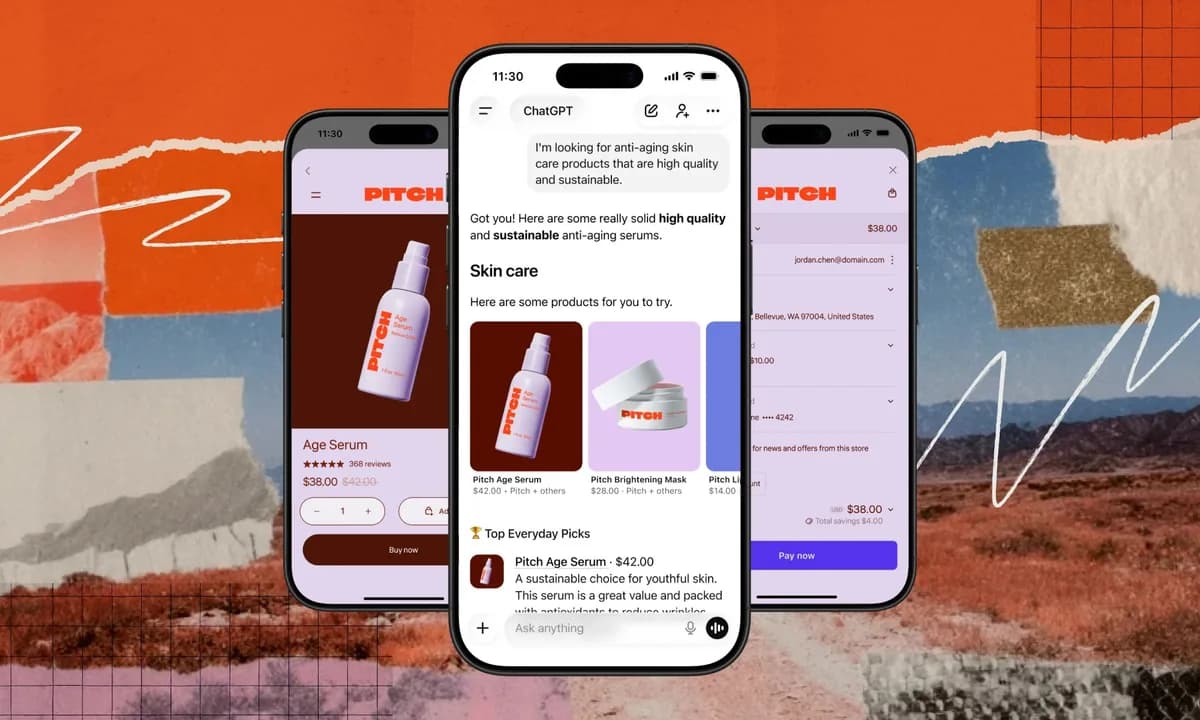
Shopify just made every merchant shoppable inside ChatGPT. Shopify President Harley Finkelstein called it the moment he's been waiting for — "The future of retail is everywhere."
He's right. But there's a part of this story that isn't getting the attention it deserves.
AI shopping assistants don't browse your store the way a customer does. They don't scroll your collection pages. They don't read your beautifully crafted product descriptions with clever marketing copy. They read structured data — clean attributes, standardized values, properly formatted feeds.
If your product data isn't structured for machines, your products don't exist in AI conversations. Period.
It's Not Just ChatGPT — Every Channel Speaks a Different Language
Here's what most merchants don't realize yet. ChatGPT is just one of many AI sales channels now live or coming soon. You've also got Google Merchant Center, Meta Catalog, TikTok Shop, and Schema.org for SEO.
And they all want your product data — but in completely different formats.
Google Merchant Center needs specific field names like image_link, its own product category taxonomy with thousands of categories, GTINs, and availability formatted as in_stock.
Meta/Facebook Catalog uses similar but not identical fields, requires condition as a mandatory attribute, and has its own category system.
TikTok Shop uses sku_id instead of id, formats availability as "in stock" (with a space, not an underscore), and has yet another category tree.
OpenAI's Agentic Commerce Protocol uses entirely different field names — item_id, image_url (not image_link), group_id for linking variants, and listing_has_variations as a boolean.
Schema.org needs JSON-LD structured data with Product, Offer, and Brand schemas injected into your page's tag.
One product. Five destinations. Five different formats. Five different rules.
The Numbers Are Staggering
This isn't a future trend. It's happening right now:
- AI-driven orders on Shopify grew 15x year-over-year in 2025
- Traffic from AI platforms to US ecommerce surged 4,700% in the same period (Adobe)
- Stores with 99%+ attribute completion see 3-4x higher AI visibility
- In one production audit, AI assistants ignored over 40% of a catalog because the feed lacked structured attributes
- McKinsey projects agentic commerce at $3-5 trillion globally by 2030
- Gartner predicts 20% of all transactions will be executed through AI platforms by 2030
What "AI-Ready" Product Data Actually Requires
Based on OpenAI's published product feed specification and Shopify's own guidance, here's what your store needs:
Machine-Parsable Attributes
Your product data must live in structured metafields and API-accessible formats — not buried in Liquid templates or JavaScript. AI crawlers and feed consumers can't parse unstructured HTML the way humans can.Literal, Factual Language
AI systems need specifics, not marketing copy. "Texturizing sea salt spray" works. "Ocean breeze for your hair" doesn't. LLMs are matching against queries like "sea salt hair spray for men under $20."Precise Taxonomy
"Men's insulated winter boots" will surface for relevant queries. "Footwear" won't. Every major platform — Google, Meta, TikTok, OpenAI — has its own category hierarchy, and your products need to be mapped to each one.Proper Variant Grouping
All variants of the same product must share agroup_id (or equivalent). Separate product pages for each color of the same t-shirt confuses AI systems and fragments your visibility.
Real-Time Pricing and Inventory
AI agents need current data. Stale pricing or inaccurate stock levels get your products filtered out — or worse, recommended when they're unavailable, damaging trust.Valid Identifiers
GTINs, barcodes, and stable product IDs are essential for cross-platform matching. Without them, AI systems can't verify your products against their databases.Standardized Attribute Values
"Royal Blue," "Azul," and "Blu" need to map to "Blue." "M," "Medium," and "MED" need to map to "M." Consistency across your entire catalog is what makes your products matchable.The Fulfillment Paradox (For Multi-Vendor Stores)
If you're a dropshipper or multi-brand retailer, there's an additional challenge that makes this genuinely hard.
Your fulfillment apps — Order Fulfillment Guru, DSers, and others — need the exact, messy vendor data to route orders correctly. Change "Royal Blue" to "Blue" in your product options and your order routing breaks. Change "XL" to "Extra Large" and your inventory sync fails.
You're stuck between messy data that keeps operations running and clean data that every sales channel demands.
The solution isn't to choose one or the other. It's to create a translation layer — a parallel set of standardized attributes that lives alongside your original data without touching it.
How Attributify Solves This
This is exactly what we built Attributify to do.
Attributify creates one standardized source of truth from your existing product data, then translates it into whatever format each destination requires — without modifying the original data your fulfillment depends on.
What you get:
- Auto-sync and attribute discovery — Import products from Shopify and automatically detect attributes across all your vendors
- Mapping rules — Turn "Royal Blue," "Azul," and "Blu" into "Blue" automatically using literal or regex pattern matching, with vendor-specific and tag-based filtering
- Product feeds — Generate ready-to-submit feeds for Google Merchant Center, Meta Catalog, TikTok Shop, and OpenAI's Agentic Commerce Protocol
- Schema.org injection — JSON-LD structured data automatically injected into your storefront via a theme app extension, making your products readable by AI crawlers and search engines
- Search & Discovery integration — Configure clean, consistent filters using standardized metafield values
- AI Readiness Score — A 0-100 score that tells you exactly where your catalog stands and what to improve
- AI-powered features — Automatic attribute extraction, mapping suggestions with confidence scores, product categorization across Google/Meta/TikTok taxonomies, and data quality checks
- Attribute libraries — Standardized Color, Size, and Material libraries with platform-specific mappings and alias matching
- Scheduled feeds — Daily, weekly, or custom feed generation schedules with email notifications
- CSV bulk import — Mass update product data with column mapping, validation, and rollback capability
The Window Is Now
Harley Finkelstein said something that stuck: "The brands that show up first in AI conversations are the ones buyers are going to remember."
He's right. And shopping habits inside AI are being formed right now — not next year, not next quarter, right now. The stores that have clean, structured, machine-readable product data today are the ones that will dominate AI-driven discovery tomorrow.
The stores that don't? They'll be invisible in the conversations where purchases are being made.
AI is the new sales channel. Your product data is your storefront. Make sure it's ready.
Attributify is live on the Shopify App Store with a 14-day free trial. Start making your store AI-ready today.